Interactive Map
Turning Raw Data Into Actionable Insights
Worked On By: Alan Y, Guang T, Yihan X, Ziqian D
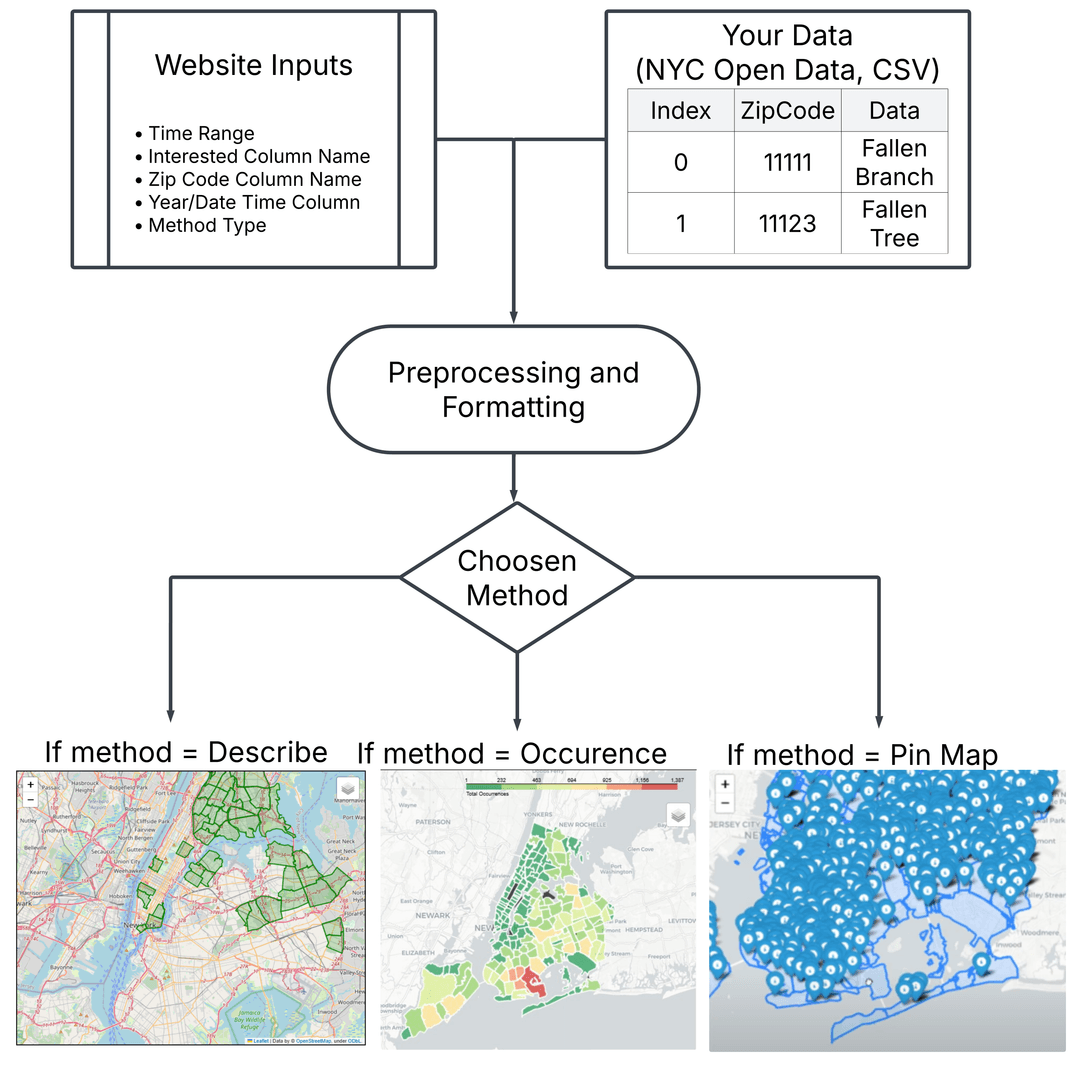
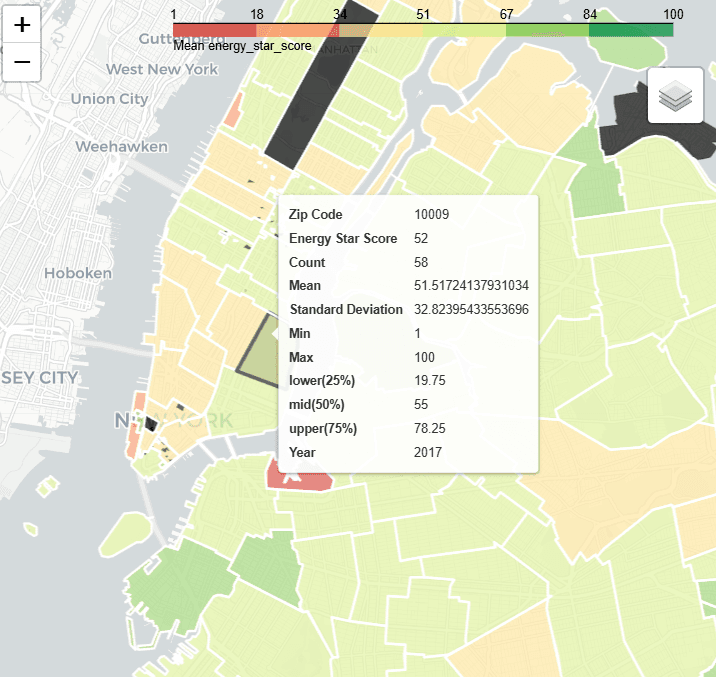
This project focuses on the development of an interactive, web-based mapping tool designed to visualize and analyze urban environmental data using open datasets from New York City. The tool allows users to explore patterns such as energy consumption, tree health, flooding incidents, and other sustainability-related indicators at a neighborhood level. By making complex datasets more accessible and engaging, the project supports informed decision-making for urban planning, climate resilience, and community awareness. This is a collaborative effort between students and faculty from the College of Engineering and Computing Sciences and is supported by institutional research initiatives and community partnerships.
Our Mission
Our mission is to harness the power of open data and interactive technology to promote environmental sustainability, urban resilience, and informed community engagement. Through the development of accessible and intuitive mapping tools, we aim to transform complex public datasets into meaningful visual insights that can be understood and used by a broad audience including students, researchers, city planners, and local residents. By visualizing data related to energy usage, infrastructure, environmental hazards, and urban ecosystems, we strive to highlight patterns, identify areas of need, and support data-informed decisions at both local and city-wide levels. Our platform helps bridge the gap between raw information and real-world impact by making it easier to explore how urban systems interact with climate, equity, and public policy.
Research Objectives
The research objectives of this project are to:
- Develop a tool that anyone can use to assist with data analysis
- Enable time-lapse study to identify trends over multiple years
- Create both heat maps and pin maps for spatial data representation
- Provide ZIP code-based neighborhood-level insights
- Support decision-making for urban environment design