Autonomous Soil Nutrient Sensing System
Revolutionizing Precision Agriculture with an Autonomous and Cost-effective Soil Nutrient Sensing System
Worked On By: Mikhail S, Yihan X,and Ziqian D
This project focuses on the development of a passive, low-cost, pervasive, maintenance-free sensor that can be interrogated wirelessly and provide measurements of soil water content, temperature, pH, and nutrient concentration for precision agriculture and environmental monitoring. This is a collaborative project with faculty from the College of Engineering and Computing Sciences and the College of Arts and Sciences. It is funded by the National Science Foundation.
Our Mission
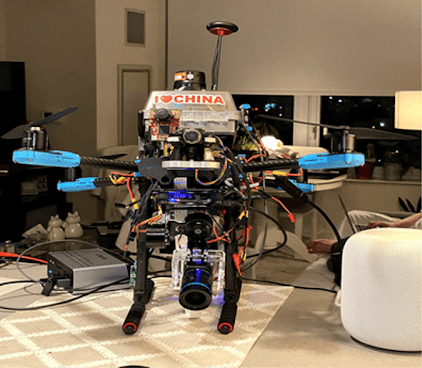
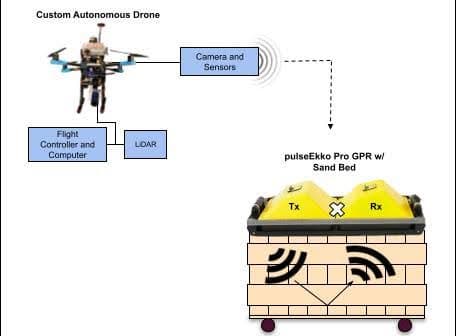
Population growth, aggressive farming practices, and climate change have put significant stress on the food production system for sustainable growth. Agricultural runoff from over-fertilization and waste from large farms into natural water sources can cause algae outbreaks, and reduce the dissolved oxygen in water, resulting in ecosystem disturbance and a decline in fish populations. Precision agriculture with data-backed decision-making such as fine-grained spatiotemporal soil properties (moisture, temperature, pH, nutrients, organic matter, etc.) has the potential to improve the efficiency of farming practices by increasing crop growth and reducing agricultural runoff that contaminates surface and groundwater along with other negative environmental impacts. The current practice of soil property measurement relies heavily on taking samples for laboratory testing, which is costly and time-consuming for implementation over large areas. This project investigates a low-cost autonomous soil nutrient sensing system to support precision agriculture by integrating microelectromechanical sensors, ground penetrating radar, as well as autonomous unmanned aerial vehicle-enabled wireless sensor network.
Research Objectives
The research objectives of this project are to:
- Identify specific polymers for nitrate and heavy metal ion detection
- Design, fabricate, and validate the surface acoustic wave sensors
- Design antennas and select proper ground-penetrating radar for wireless measurement of the passive sensors
- Integrate the data analysis and communication system